


The label "business class" covers a remarkably wide range of actual experiences. Two airlines can both sell premium cabin tickets at comparable prices yet deliver journeys that feel nothing alike. One may feature a fully enclosed private suite, chef-prepared dining, and an award-winning hub lounge. Another may offer a wider seat and not much else.
As competition for premium travelers intensifies, airlines are channeling serious investment into their business class products. The result is that today's leading cabins offer levels of privacy, comfort, and service that would have seemed extraordinary just a decade ago — rivaling what first class once delivered.
For international travelers, selecting the right airline can shape the overall experience just as significantly as choosing the destination itself. If you're evaluating premium travel options, browsing current business class flight deals can help identify where the strongest balance of comfort, service, and value currently lies.
What Separates a World-Class Business Class from an Average One?
Before examining specific airlines, it helps to understand what actually distinguishes the best premium products from the rest. Across the board, the top-ranked airlines deliver consistently across several dimensions:
- Seat comfort and genuine privacy
- Thoughtful cabin design
- Sleep quality on overnight sectors
- Food and beverage programme
- Airport lounge experience
- Cabin crew attentiveness and training
- In-flight entertainment quality
- Consistency across different routes and aircraft
An airline that performs brilliantly on one flight but inconsistently across its network doesn't belong in the same conversation as those that maintain high standards at scale.
1. Qatar Airways – The Benchmark for Business Class
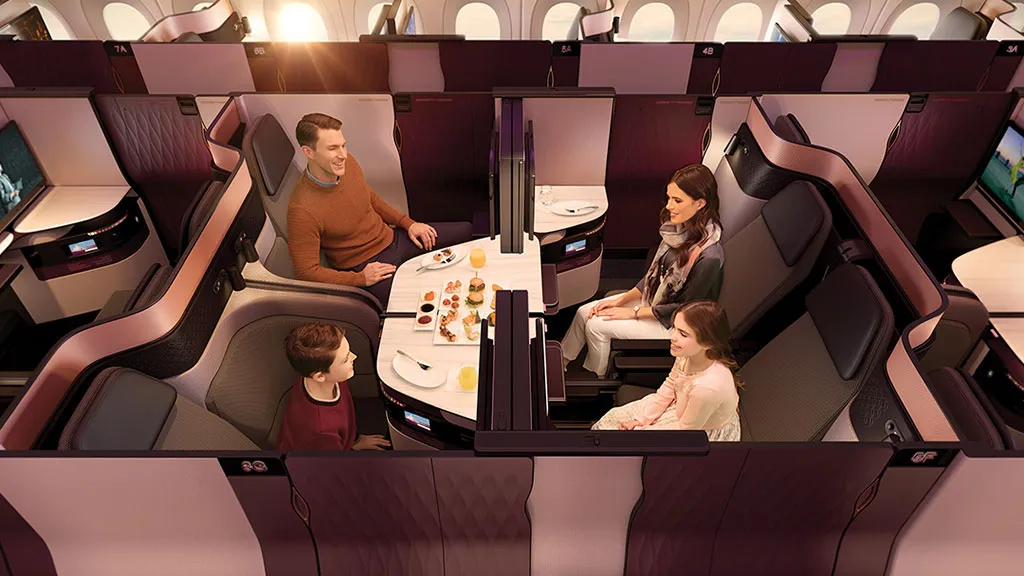
Among aviation professionals and frequent long-haul travelers, Qatar Airways has occupied the top position in business class rankings for several consecutive years — and for clear reasons.
The Qsuite reshaped industry expectations when it launched and continues to be refined. It introduced a level of genuine privacy that most rivals have yet to match at scale, built around:
- Fully enclosed private suites with sliding doors
- Double-bed configurations available on selected seats
- On-demand dining — eat when you choose, not when the crew schedules
- Premium mattress quality noticeably above most competitors
- Exceptionally high and consistent service standards
What distinguishes Qatar beyond the hardware is delivery. The experience holds up across routes, aircraft rotations, and destinations. The airline's hub at Doha's Hamad International Airport reinforces this with one of the world's most impressive premium transit experiences.
2. Singapore Airlines – Precision and Refinement
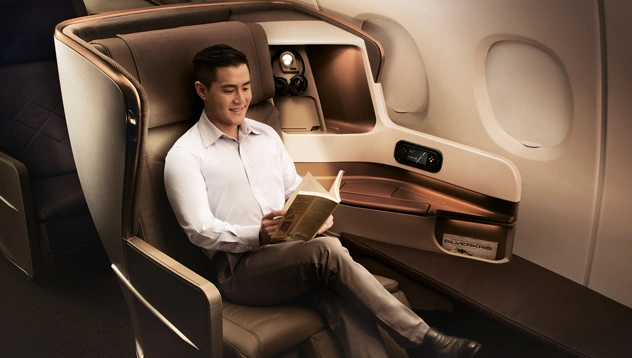
Singapore Airlines has spent decades building a service culture that is genuinely difficult to replicate. The result is a business class product defined less by individual flashy features and more by how seamlessly every element comes together.
The airline's business class stands out through:
- Generously proportioned seating with strong privacy
- Cabin crew rigorously trained to an exceptionally high standard
- A dining programme — including the pre-order Book the Cook service — that rivals quality restaurants
- Superior bedding and sleep comfort
- Consistently high passenger satisfaction across routes
Many frequent travelers describe flying Singapore Airlines business class as one of the most effortless travel experiences available — everything simply works, without drama or compromise.
3. Emirates – A Premium Experience Built Around Theatre

Emirates approaches business class differently from its Gulf competitors. Where others prioritize privacy architecture, Emirates delivers a richer, more theatrical version of premium travel — one designed to feel like an occasion from the moment you check in.
The experience is built around:
- Elegant, generously proportioned cabin interiors
- A curated wine and dining programme with global scope
- One of the largest in-flight entertainment libraries in commercial aviation
- Chauffeur transfers in select markets
- World-class lounge facilities at Dubai International
On A380-operated routes, the onboard lounge bar remains one of commercial aviation's most distinctive features — genuinely unlike anything else currently offered at business class level. For travelers who value a social, immersive premium experience, Emirates consistently delivers.
4. ANA (All Nippon Airways) – Innovation Meets Japanese Hospitality
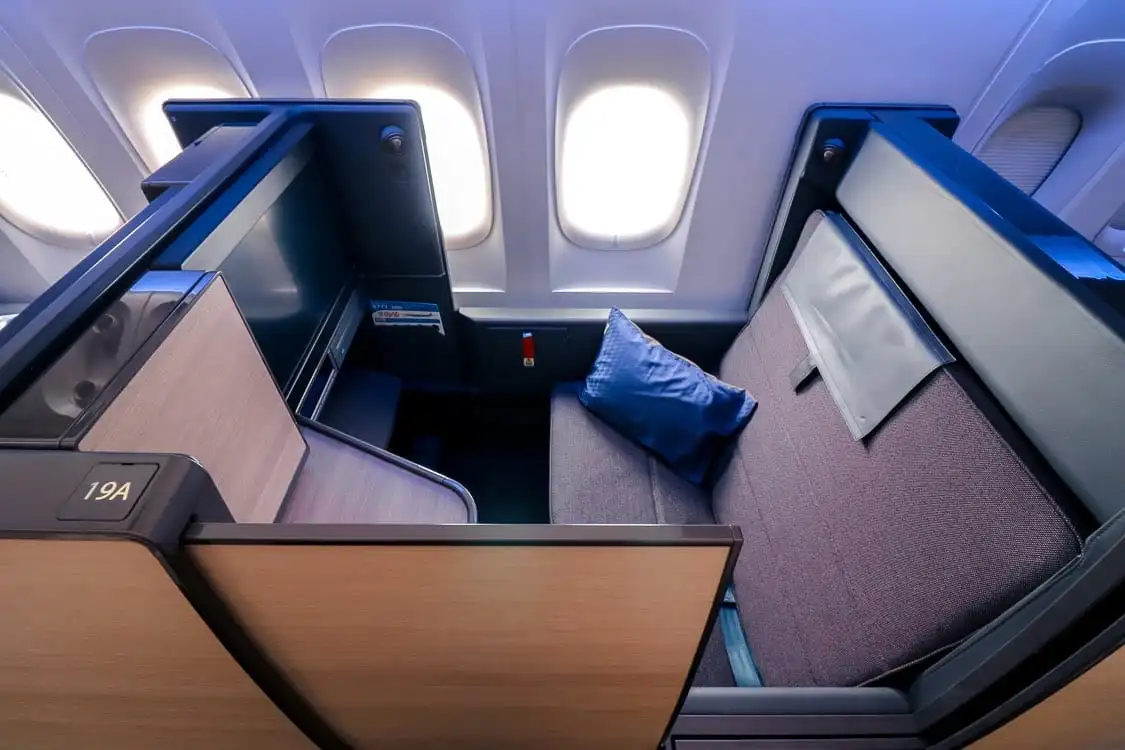
ANA's business class product, known as The Room, has generated significant praise since its introduction and continues to be recognised as one of the most thoughtfully designed premium cabins currently flying.
What sets ANA apart:
- Exceptionally wide seat configurations with outstanding privacy
- A calm, quiet cabin environment that prioritises rest
- Meticulous Japanese hospitality standards applied to every service interaction
- High-quality catering reflecting genuine culinary care
- A modern, functional design that avoids unnecessary complexity
For travelers crossing the Pacific, ANA consistently ranks among the strongest available options in terms of both product quality and service reliability.
5. Turkish Airlines – Premium Value with Unmatched Reach
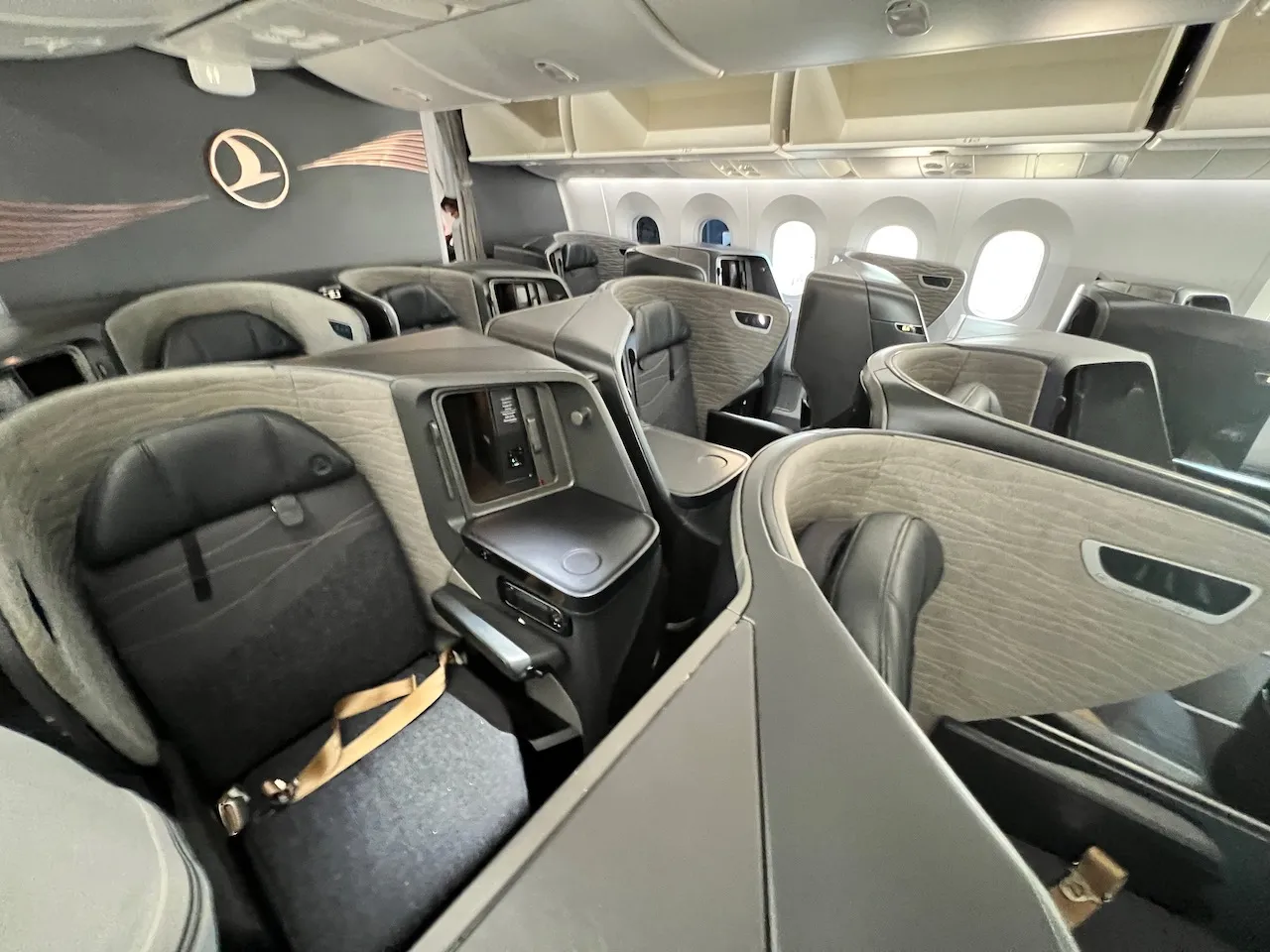
Turkish Airlines has built a reputation as one of the most compelling value propositions in international business class — a carrier that combines strong cabin quality, exceptional dining, and an extraordinarily wide network through its Istanbul hub.
Key highlights of the business class product:
- A dining programme that is among the most praised in the industry
- Comfortable, well-designed seating
- Istanbul Airport's strategic position bridging Europe, Asia, Africa, and the Middle East
- Competitive pricing relative to comparable premium products
- Genuine warmth in service delivery
For travelers whose routing passes through Istanbul, Turkish Airlines offers a premium experience that frequently surpasses expectations given its price point.
6. Air France – European Elegance in the Air
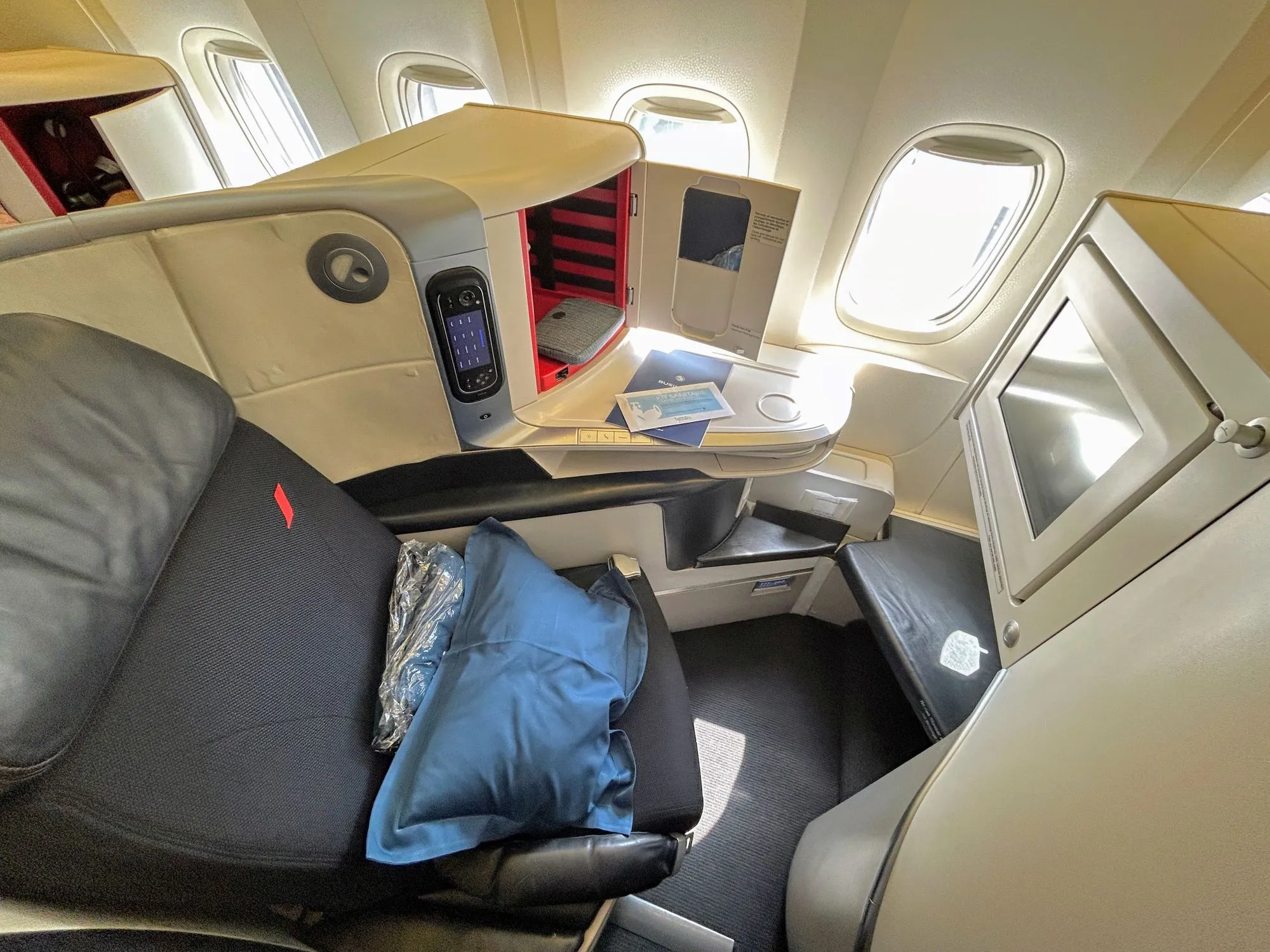
Air France has committed significant resources to its premium cabin upgrades, and the current business class product reflects that investment with a distinctly Parisian sensibility.
The cabin experience features:
- Full privacy doors on the latest suite configurations
- Interiors designed with genuine attention to French aesthetic tradition
- A wine and culinary programme that sets a high bar among European carriers
- Enhanced sleep comfort on long-haul sectors
- Modern entertainment systems with strong content selection
Travelers who place dining and design at the centre of their premium travel preferences frequently place Air France among their top choices.
7. Cathay Pacific – Understated Excellence
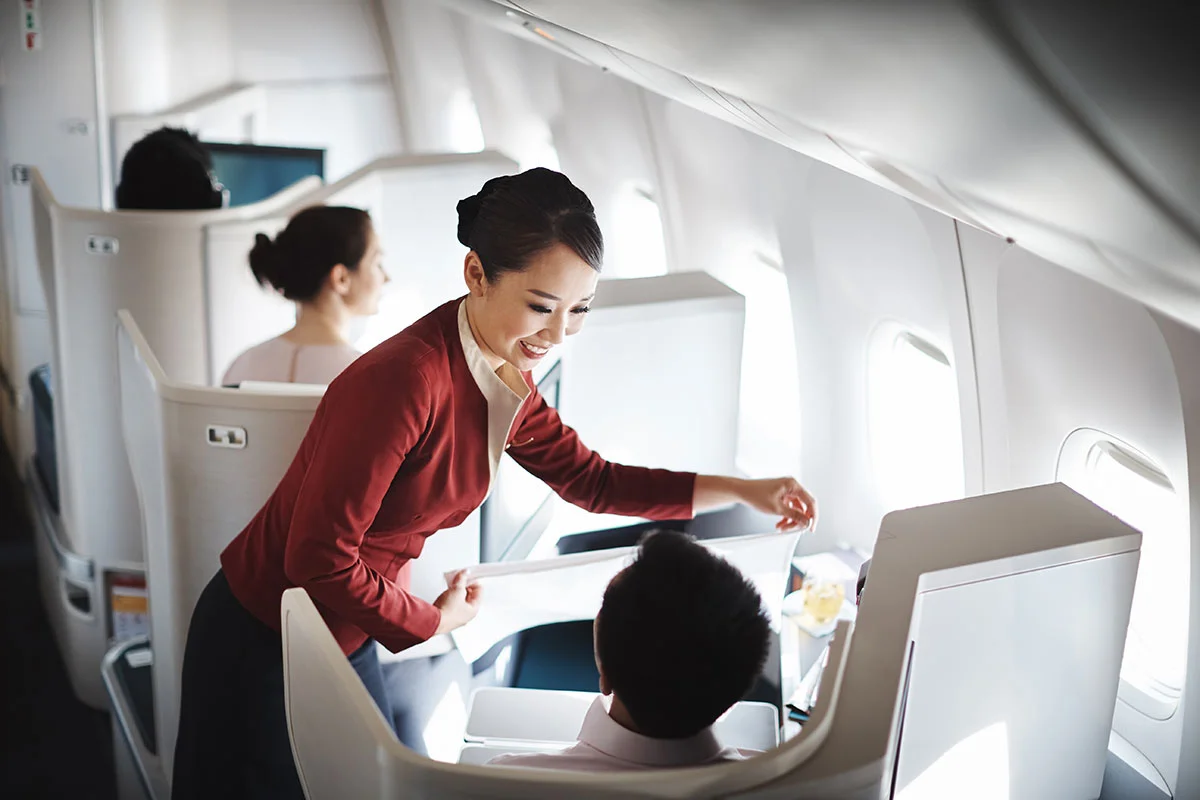
Cathay Pacific occupies a distinct space in the premium travel landscape — an airline that builds its reputation on calm consistency rather than headline-grabbing features. For many frequent flyers, this is precisely the point.
The business class product is recognised for:
- Sophisticated, restrained cabin design that ages well
- Superior bedding among Asian carriers
- A lounge network across major airports that is consistently well-regarded
- Reliable, professional service without theatrics
- A comfortable long-haul environment that arrives passengers in good condition
Travelers who value this more measured approach to premium travel often become loyal Cathay Pacific regulars.
8. Etihad Airways – Premium Quality at a Competitive Price Point
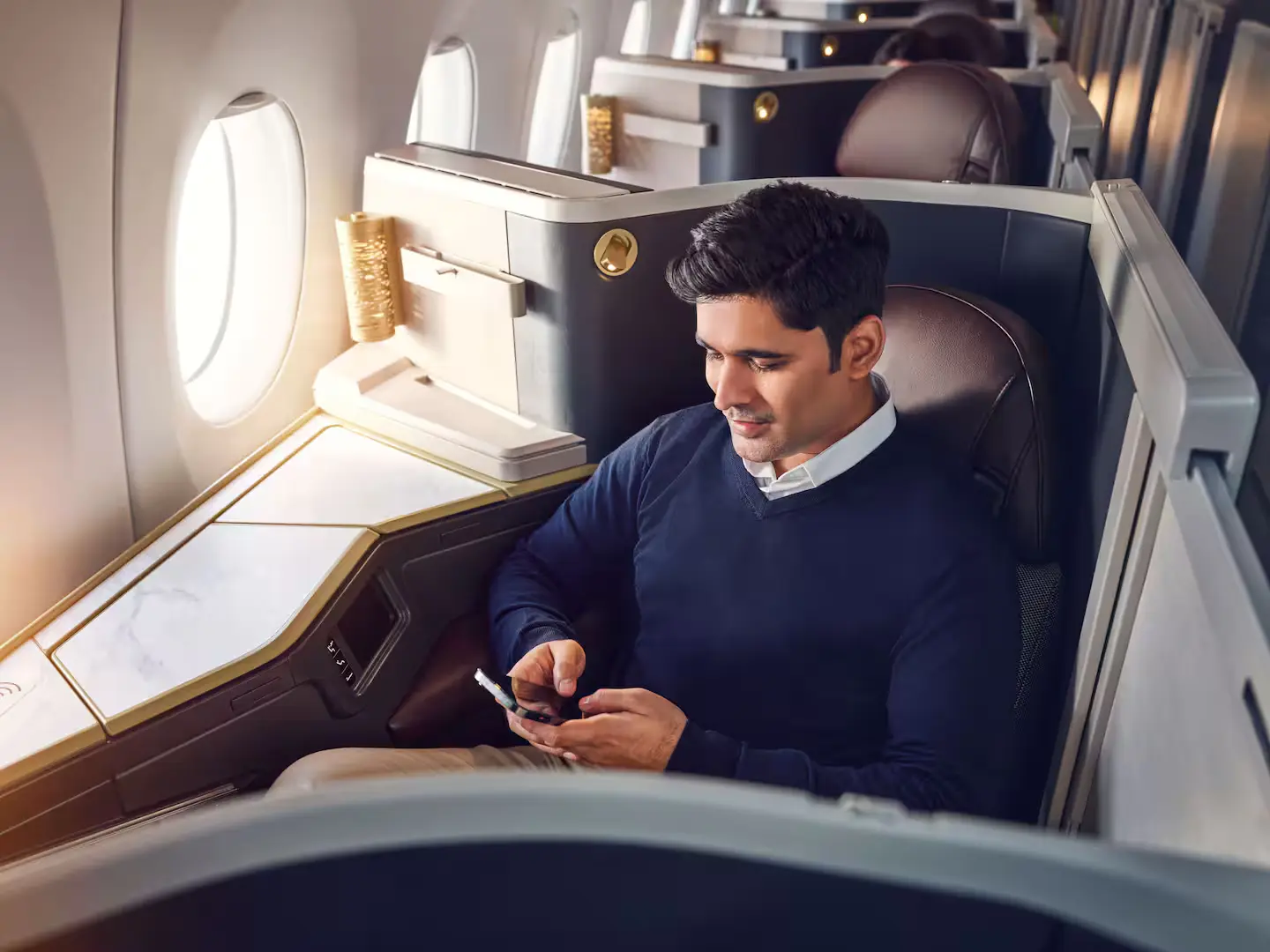
Etihad has repositioned itself as one of the more compelling value choices in international business class following a focused product and service relaunch in recent years.
Business class passengers benefit from:
- Stylish, contemporary cabin design with good privacy
- A strong dining programme that has improved considerably
- Spacious seating configurations with direct aisle access
- Abu Dhabi's Terminal A — now among the Gulf's most impressive transit facilities
- Pricing that frequently undercuts comparable Gulf competitors
For travelers seeking a genuine premium experience without paying the highest available fare, Etihad consistently represents strong value.
9. Lufthansa – The Trusted European Standard
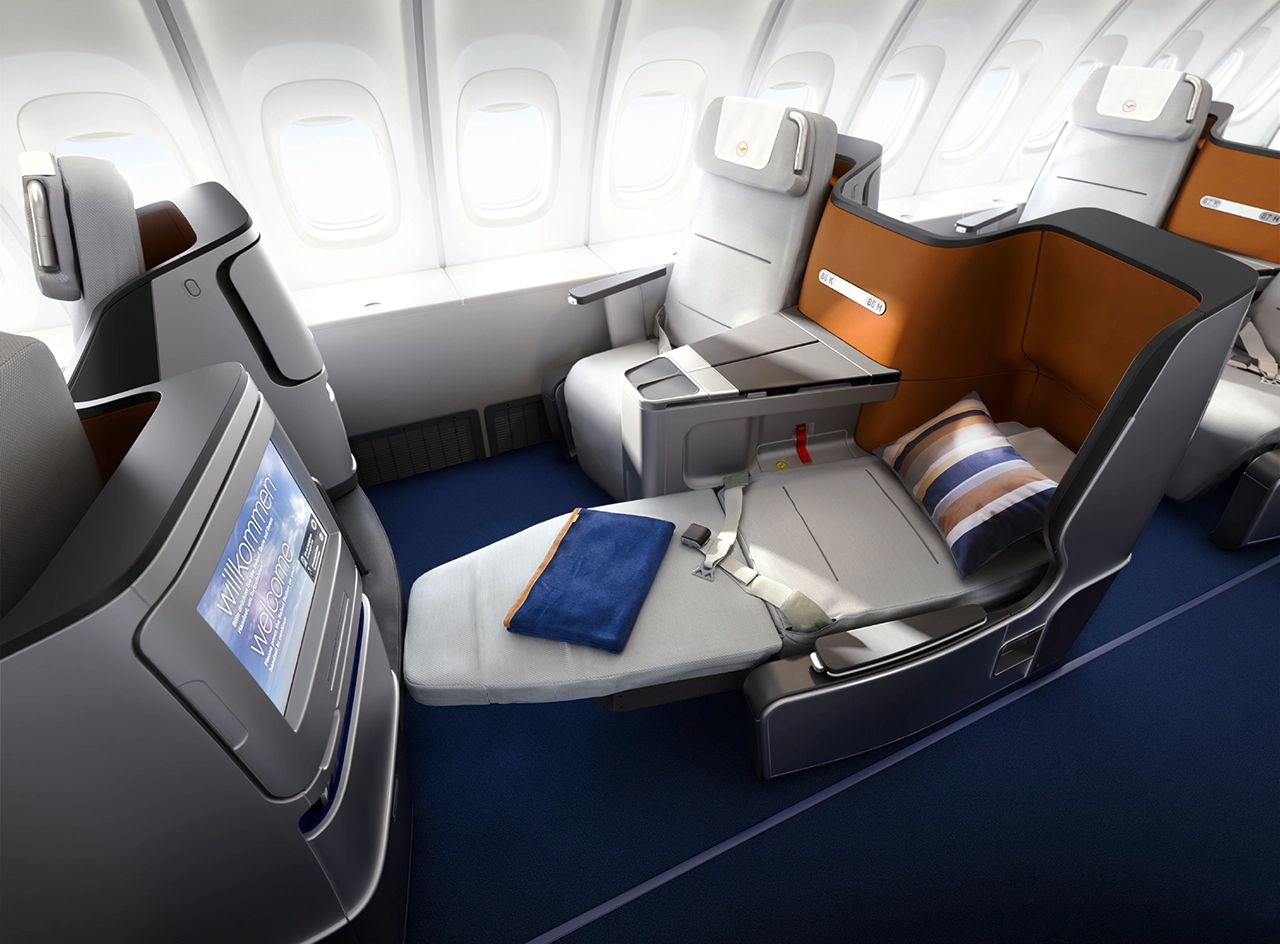
Lufthansa remains one of the most relied-upon options for international business travelers, built on a foundation of operational reliability and professional service delivery that its European competitors struggle to match consistently.
The airline performs well across:
- Punctuality and schedule reliability
- A strong European and global connection network through Frankfurt and Munich
- Quality lounge facilities at both hubs
- Professional, efficient cabin service
- New business class products that are closing the gap with Middle Eastern and Asian rivals
For corporate travelers whose itineraries are centred on Europe, Lufthansa frequently represents the most practical premium choice.
10. Virgin Atlantic – Premium Travel with a Distinct Personality
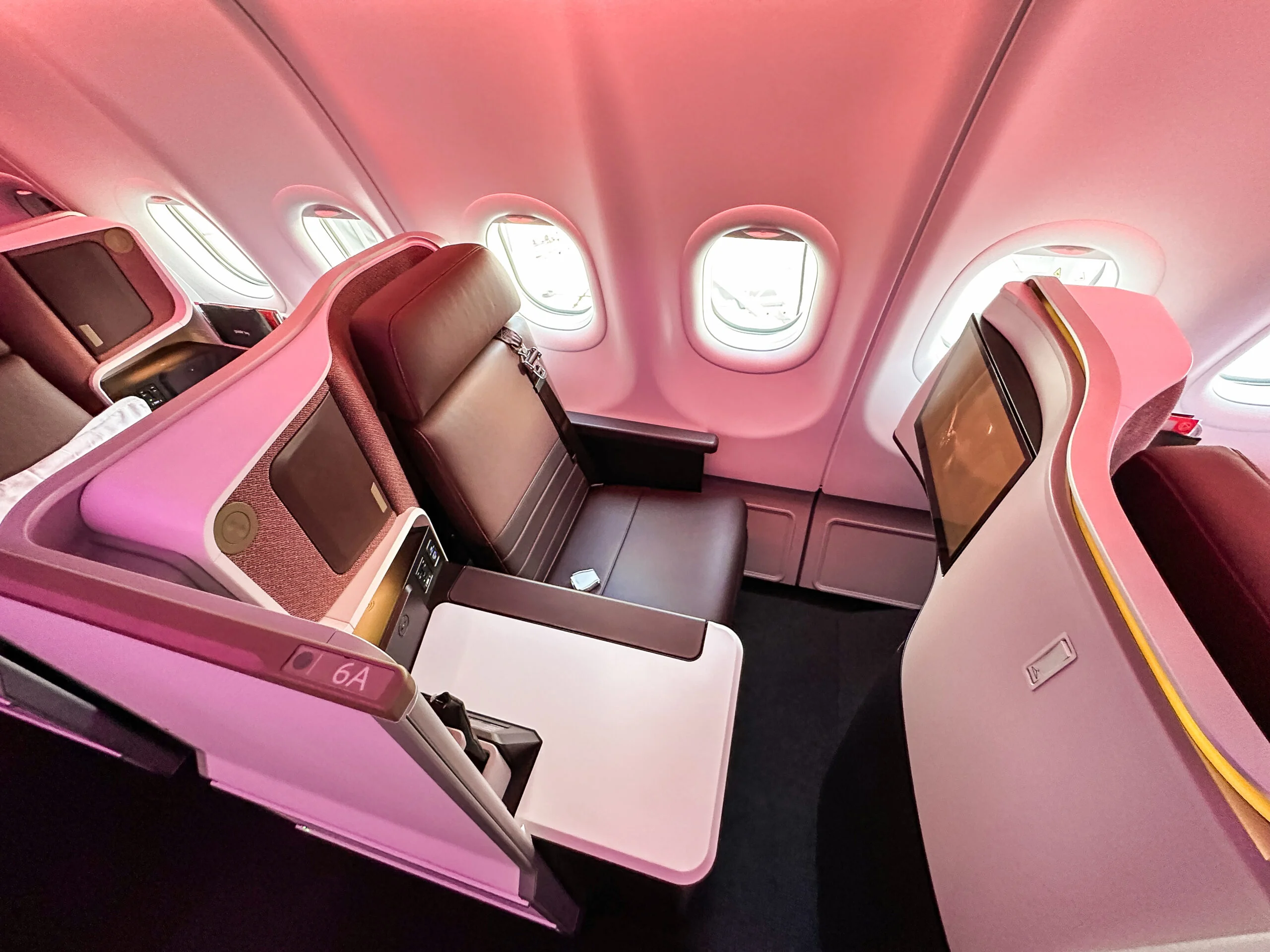
Virgin Atlantic brings a genuinely different energy to the premium cabin — one that has cultivated a loyal following among travelers who find traditional business class atmospheres overly formal.
The airline's business class product offers:
- Modern cabin design with strong visual identity
- A service style that is warm and approachable rather than stiff
- Comfortable seating configurations with good entertainment
- A strong transatlantic network particularly well-suited to UK-US routes
- An overall atmosphere that many travelers find more enjoyable than conventional premium cabins
For those who want genuine comfort without the corporate rigidity associated with some premium carriers, Virgin Atlantic is a consistently popular choice.
Which Airline Is Best for Business Class Flights to India?
For travelers with India as their destination, the premium options are plentiful and the quality is high. Airlines that consistently perform well on India routes & price range from USA include:
- Qatar Airways ($2,299–$3,240)
- Emirates ($2,299–$3,240)
- Singapore Airlines ($2,299–$3,240)
- Etihad Airways ($2,499–$3,599)
- Air India's upgraded fleet ($2,499–$3,599)
- Lufthansa ($2,450–$3,500)
- Air France ($2,450–$3,500)
The right choice depends on departure city, connection times, budget, seat preference, and loyalty programme. Travelers comparing business flights to India often find that the strongest overall option is not necessarily the most expensive one — particularly when Etihad or Turkish Airlines route options are included in the comparison.
Which Airline Is Best for Business Class Flights to Africa?
For travelers flying to Africa, the business class landscape is surprisingly strong — and more competitive than many expect. Whether the destination is East Africa, West Africa, Southern Africa, or North Africa, several carriers have built impressive networks and premium products around the continent.
Airlines that consistently perform well on Africa routes & price range from USA include:
- Turkish Airlines ($3,200–$5,500)
- Emirates ($3,500–$6,000)
- Qatar Airways ($3,500–$6,000)
- Ethiopian Airlines ($3,000–$5,000)
- Air France ($3,500–$5,500)
- Lufthansa ($3,500–$5,500)
- Kenya Airways ($3,200–$5,000)
- Royal Air Maroc ($2,800–$4,500)
Turkish Airlines deserves particular mention — its Istanbul hub connects to more African destinations than any other carrier globally, making it an outstanding option for travelers reaching secondary cities beyond the main hubs. Emirates and Qatar Airways offer strong premium cabins with efficient connections through Dubai and Doha respectively, covering major destinations including Nairobi, Lagos, Johannesburg, Accra, and Addis Ababa.
Ethiopian Airlines, as Africa's largest and most awarded carrier, provides extensive onward connectivity across the continent through its Addis Ababa hub — a practical choice for travelers continuing beyond gateway cities. Air France and Lufthansa remain strong options for European travelers or those routing through Paris and Frankfurt, particularly for West and Central African destinations.
The right choice ultimately depends on departure city, specific African destination, total journey time, and onboard product preference. Travelers comparing business class flight deals to Africa often find that Turkish Airlines and Ethiopian Airlines offer surprisingly strong value, while Emirates and Qatar Airways lead on cabin quality and hub experience.
Which Airline Is Best for Business Class Flights to Asia?
Asia encompasses an enormous range of destinations — from East Asian capitals like Tokyo and Seoul to Southeast Asian hubs like Bangkok, Kuala Lumpur, and Ho Chi Minh City. The good news is that the continent is served by some of the strongest business class products in commercial aviation.
Airlines that consistently perform well on Asia routes & price range from USA include:
- Singapore Airlines ($3,200–$5,500)
- Cathay Pacific ($3,000–$5,200)
- Qatar Airways ($2,900–$5,000)
- ANA (All Nippon Airways) ($2,800–$4,800)
- Japan Airlines ($2,800–$4,800)
- Korean Air ($2,600–$4,500)
- Emirates ($3,000–$5,000)
- Turkish Airlines ($2,600–$4,200)
- Thai Airways ($2,800–$4,500)
Singapore Airlines and Cathay Pacific are the natural benchmarks for intra-Asian and long-haul Asian travel — both carriers operate modern fleets with consistently high service standards and strong hub connections through Changi and Hong Kong International respectively. For travelers from North America or Europe, routing via Doha or Dubai on Qatar Airways or Emirates provides excellent premium cabin quality with broad onward connectivity across the region.
ANA and Japan Airlines are standout choices for trans-Pacific routing, particularly for travelers whose final destination is Japan or Northeast Asia. Korean Air also delivers a strong long-haul product for Seoul connections. Turkish Airlines deserves consideration for its extensive Asian network through Istanbul, often at competitive price points. The right choice depends on your specific destination city, departure point, and whether total journey time or cabin quality takes priority. Travelers comparing business class flight deals to Asia frequently find that premium options are more accessible than expected across this region.
Which Airline Is Best for Business Class Flights to Australia?
Australia's distance from most major origin markets makes long-haul business class not just a comfort consideration but a practical necessity for many travelers. Flights from the US, UK, or Europe to Sydney, Melbourne, or Brisbane routinely exceed 20 hours with a connection, making cabin quality directly relevant to how you arrive.
Airlines that consistently perform well on Australia routes & price range from USA include:
- Qantas ($5,500–$8,000)
- Singapore Airlines ($5,500–$8,000)
- Emirates ($5,200–$7,500)
- Qatar Airways ($5,200–$7,500)
- Cathay Pacific ($5,000–$7,200)
- Etihad Airways ($4,800–$7,000)
- Air New Zealand ($5,500–$8,500)
- Malaysia Airlines ($4,500–$6,500)
Qantas is the national carrier and a natural first consideration — its business class product on international long-haul routes is genuinely competitive, and the airline offers the only nonstop service between Australia and the UK (Perth to London). Singapore Airlines via Changi is widely regarded as one of the most premium routing options, combining an excellent cabin with a world-class transit airport. Emirates via Dubai offers exceptional breadth of onward connectivity and outstanding lounge facilities.
Qatar Airways via Doha provides strong competition with its Qsuite product and a well-regarded hub. For travelers seeking strong value, Etihad and Malaysia Airlines can offer competitive pricing without compromising meaningfully on the premium experience. Cathay Pacific through Hong Kong remains a solid option for travelers from Asia and North America. Travelers comparing business class flight deals to Australia will find that the Gulf carriers particularly stand out on price-versus-quality metrics.
Which Airline Is Best for Business Class Flights to Bali?
Bali — served by Ngurah Rai International Airport (DPS) — is one of Southeast Asia's most visited destinations, yet the number of airlines offering true long-haul business class directly to Bali is more limited than for major regional hubs. Most premium itineraries involve a connection, making the choice of hub airport and airline particularly important.
Airlines that consistently perform well on Bali routes & price range from USA include:
- Singapore Airlines ($3,800–$5,800)
- Qatar Airways ($3,500–$5,500)
- Emirates ($3,600–$5,500)
- Cathay Pacific ($3,500–$5,200)
- Garuda Indonesia ($3,200–$5,000)
- Malaysia Airlines ($3,000–$4,800)
- Etihad Airways ($3,400–$5,200)
- Turkish Airlines ($3,200–$4,800)
Singapore Airlines offers one of the most seamless connections to Bali via Changi, with short transit times and a consistently excellent business class experience. Cathay Pacific via Hong Kong is another strong option, particularly for travelers from Europe or North America seeking a premium cabin with efficient onward connectivity. Garuda Indonesia, the national carrier, operates a respected business class product and provides direct services from select international cities.
For travelers from the USA, UK, or Europe, connecting through Doha on Qatar Airways or through Dubai on Emirates offers premium hub lounges and competitive business class cabins before the final sector into Bali. Emirates in particular provides one of the most complete end-to-end luxury experiences when flying into Southeast Asia. Travelers comparing business class flight deals to Bali will find that routing strategy — particularly hub choice — has a significant impact on both price and overall journey quality.
Which Airline Is Best for Business Class Flights to China?
China's major gateway cities — Beijing, Shanghai, Guangzhou, and Chengdu — are served by a mix of Chinese carriers and leading international airlines. Premium cabin quality varies considerably across this landscape, making airline selection particularly important for long-haul travelers.
Airlines that consistently perform well on China routes & price range from USA include:
- Cathay Pacific ($3,200–$5,500)
- Singapore Airlines ($3,200–$5,500)
- Air China ($2,800–$4,500)
- China Eastern Airlines ($2,800–$4,500)
- Lufthansa ($3,500–$5,500)
- Qatar Airways ($3,200–$5,200)
- Emirates ($3,200–$5,200)
- ANA (All Nippon Airways) ($2,900–$4,800)
Cathay Pacific via Hong Kong is widely regarded as the premium benchmark for China travel, offering an excellent business class product with smooth onward connections to multiple Chinese cities. Singapore Airlines via Changi provides a comparable level of service and is particularly convenient for travelers routing through Southeast Asia. Among Chinese carriers, Air China and China Eastern have improved their long-haul business class products in recent years and offer extensive domestic onward connectivity once in China.
For American travelers, Lufthansa provides reliable and well-regarded service to Beijing and Shanghai through its Frankfurt and Munich hubs. Qatar Airways and Emirates are strong options for travelers from North America or other regions who prefer Gulf hub connections, with solid onward coverage to major Chinese cities. ANA is a particularly strong choice for travel to China via Tokyo. Travelers comparing business class flight deals to China will find that Cathay Pacific and Singapore Airlines consistently deliver the strongest combination of cabin quality and hub efficiency.
Which Airline Is Best for Business Class Flights to the Middle East?
For travelers heading to the Middle East — whether to Dubai, Abu Dhabi, Doha, Riyadh, Jeddah, Kuwait City, or Beirut — the region's own carriers naturally dominate the landscape. The Gulf's three main airlines have invested more heavily in business class than almost any other group of carriers globally, making premium travel to the region genuinely outstanding.
Airlines that consistently perform well on Middle East routes & price range from USA include:
- Emirates ($1,800–$3,200)
- Qatar Airways ($1,800–$3,200)
- Etihad Airways ($1,700–$3,000)
- Oman Air ($1,800–$3,000)
- Gulf Air ($1,800–$3,000)
- Turkish Airlines ($1,600–$2,800)
- Lufthansa ($2,000–$3,500)
- British Airways ($2,000–$3,500)
Emirates, Qatar Airways, and Etihad are the natural frontrunners — all three operate modern widebody fleets with strong business class products and direct services from a wide range of international origins. Emirates' Dubai hub offers exceptional lounge facilities and the broadest network, while Qatar's Qsuite leads on privacy and cabin design. Etihad provides a compelling premium experience with Abu Dhabi's Terminal A now among the Gulf's best transit facilities.
For travelers from USA, Turkish Airlines offers strong connectivity through Istanbul with competitive pricing and an impressive route network covering most Middle Eastern cities. Oman Air and Gulf Air are worth considering for Muscat and Bahrain specifically, both offering intimate and well-regarded business class experiences. Travelers comparing business class flight deals to the Middle East will find that competition among Gulf carriers is particularly intense — and that competition typically works in the traveler's favor on pricing.
Which Airline Is Best for Business Class Flights to Europe?
Europe is the world's most connected long-haul destination, with dozens of airlines competing for premium travelers. The sheer breadth of options means that smart route selection and airline comparison can deliver significantly better value and cabin quality than defaulting to the most familiar name.
Airlines that consistently perform well on Europe routes & price range from USA include:
- Lufthansa ($2,800–$3,800)
- Air France ($3,000–$4,200)
- British Airways ($2,900–$4,000)
- Swiss International Air Lines ($3,200–$4,500)
- KLM Royal Dutch Airlines ($2,900–$3,800)
- Qatar Airways ($2,800–$3,800)
- Emirates ($3,000–$4,200)
- Turkish Airlines ($2,600–$3,500)
- Iberia ($2,700–$3,600)
- Virgin Atlantic ($2,800–$3,800)
Among European carriers, Lufthansa and Air France lead on long-haul business class quality, with strong Frankfurt, Munich, and Paris hub operations and continuously improving premium cabin products. British Airways remains the dominant choice on transatlantic routes through London Heathrow, while Swiss and KLM offer refined business class experiences through Zurich and Amsterdam respectively. Virgin Atlantic is a particularly popular option for transatlantic travel, with a distinctive cabin personality that many premium travelers prefer.
For travelers routing through the USA, Qatar Airways, Emirates, and Turkish Airlines all offer premium business class access to European destinations with competitive pricing — often undercutting the European carriers on comparable routes while matching or exceeding them on cabin quality. Turkish Airlines is especially strong for broader European coverage, with its Istanbul hub providing access to cities that other long-haul carriers don't serve nonstop. Travelers comparing business class flight deals to Europe will find that the competitive landscape here is one of the richest of any global region.
Which Airline Is Best for Business Class Flights to Japan?
Japan is consistently ranked among the world's top long-haul destinations, and the airlines serving Tokyo, Osaka, and beyond reflect that status — the carrier options on Japan routes include some of the finest business class products in commercial aviation.
Airlines that consistently perform well on Japan routes & price range from USA include:
- ANA (All Nippon Airways) ($2,800–$4,500)
- Japan Airlines ($2,800–$4,500)
- Singapore Airlines ($3,200–$5,000)
- Cathay Pacific ($3,000–$4,800)
- Korean Air ($2,700–$4,200)
- Qatar Airways ($3,000–$4,800)
- Lufthansa ($3,200–$5,000)
- United Airlines ($2,600–$4,000)
ANA and Japan Airlines are the obvious starting points — both carry the hallmarks of Japanese hospitality into the air, delivering a level of attentiveness, meal quality, and cabin calm that is difficult to match. ANA's The Room business class product is particularly well regarded, with outstanding privacy and a serene cabin environment. Japan Airlines' Sky Suite is similarly competitive. Both carriers operate nonstop services between Japan and major North American and European cities.
For travelers who prefer routing through a US hub, Qatar Airways provides strong connectivity to Tokyo and other Japanese cities via Doha, with the Qsuite offering exceptional privacy. Singapore Airlines via Changi is another premium option with an excellent transit experience and competitive onward schedules. Cathay Pacific through Hong Kong provides efficient connections with a well-regarded business class product. Travelers comparing business class flight deals to Japan will find that ANA and Japan Airlines frequently offer the most distinctive and culturally immersive premium experience on this route.
Which Airline Is Best for Business Class Flights to Nepal?
Nepal — and Kathmandu's Tribhuvan International Airport specifically — is not served by as many international carriers as major Asian hub cities, which makes airline and routing selection especially important for premium travelers. Most long-haul itineraries require a connection, and hub choice significantly affects total journey time and comfort.
Airlines that consistently perform well on Nepal routes & price range from USA include:
- Qatar Airways ($2,800–$4,500)
- Emirates ($2,800–$4,500)
- Turkish Airlines ($2,600–$4,200)
- Air India ($2,400–$3,800)
- IndiGo ($2,200–$3,500)
- Oman Air ($2,500–$3,900)
- Etihad Airways ($2,600–$4,000)
- China Southern Airlines ($2,400–$3,800)
Qatar Airways via Doha is widely regarded as the premium benchmark for Kathmandu connections, offering excellent Qsuite business class on the long-haul segment with smooth onward connectivity and one of the best hub airport experiences in the world. Emirates via Dubai provides strong competition with broader global network coverage. Turkish Airlines via Istanbul is a strong option for European travelers and those seeking competitive pricing without a major compromise on cabin quality.
Air India offers the advantage of domestic connections through Delhi, providing access to a nonstop or short-hop final sector into Kathmandu from India's capital. For travelers from South Asia, IndiGo and Oman Air also provide reliable connecting options. Given Kathmandu's altitude and the often tiring nature of onward mountain travel, arriving well-rested in a lie-flat business class cabin is a particularly worthwhile investment on this route. Travelers comparing business class flight deals to Nepal will find Qatar Airways and Emirates consistently offer the strongest end-to-end premium experience.
Which Airline Is Best for Business Class Flights to New Zealand?
New Zealand sits at the far end of most long-haul flight paths, and the journey from Europe or North America to Auckland or Christchurch routinely exceeds 20 to 24 hours with a connection. On routes of this length, the business class product you choose has a more significant impact on arrival condition than almost any other destination.
Airlines that consistently perform well on New Zealand routes & price range from USA include:
- Air New Zealand ($5,800–$9,000)
- Singapore Airlines ($5,500–$8,500)
- Emirates ($5,500–$8,000)
- Qatar Airways ($5,500–$8,000)
- Qantas ($5,800–$8,500)
- Cathay Pacific ($5,200–$7,800)
- Etihad Airways ($5,000–$7,500)
- United Airlines ($5,000–$7,500)
Air New Zealand is the national carrier and a genuine premium aviation standout — its business class product, known as Business Premier, features a fully lie-flat bed with direct aisle access and is consistently rated among the best in its class. The airline operates nonstop services from London Heathrow and Los Angeles to Auckland, offering a true direct option for travelers from key origin markets. Singapore Airlines via Changi is another outstanding choice, combining an excellent business class cabin with the world's best-rated transit airport.
Emirates via Dubai provides one of the most extensive network options for reaching New Zealand, with connections from a vast range of international departure cities and strong hub lounge facilities. Qatar Airways via Doha offers the Qsuite product on the long-haul sector and is particularly popular with travelers from Europe and North America. Qantas and Cathay Pacific provide additional premium options for those routing through Sydney or Hong Kong respectively. Travelers comparing business class flight deals to New Zealand will find that Air New Zealand and Singapore Airlines deliver the most complete premium experiences on this route.
Which Airline Is Best for Business Class Flights to Singapore?
Singapore is both a major destination in its own right and one of the world's most important transit hubs — and fittingly, it is served by some of the finest airlines in commercial aviation. Travelers flying into Changi Airport can choose from a premium lineup that is arguably stronger than on any other single long-haul destination globally.
Airlines that consistently perform well on Singapore routes & price range from USA include:
- Singapore Airlines ($3,800–$5,500)
- Cathay Pacific ($3,600–$5,200)
- Qatar Airways ($3,500–$5,000)
- Emirates ($3,700–$5,300)
- British Airways ($4,000–$5,800)
- Lufthansa ($4,000–$5,800)
- ANA (All Nippon Airways) ($3,600–$5,200)
- Malaysia Airlines ($3,200–$4,800)
Singapore Airlines is the obvious standout — the home carrier for Changi Airport, it offers nonstop business class services from a wide range of global cities including New York, Los Angeles, San Francisco, London, and Frankfurt. Flying Singapore Airlines into Singapore delivers the added benefit of arriving at the world's best-rated airport on the world's most awarded airline — an experience that begins before takeoff and continues through arrival. The airline's business class product, with its Book the Cook dining and superior bedding, is among the finest on any long-haul route.
Cathay Pacific via Hong Kong provides a strong alternative with excellent onward connections and a well-regarded business class cabin. Qatar Airways offers competitive pricing via Doha with the Qsuite product on the long-haul sector. For American travelers, British Airways and Lufthansa offer reliable direct services into Singapore from London and Frankfurt respectively. Malaysia Airlines is worth considering for competitive pricing and a comfortable premium cabin, particularly from within Asia. Travelers comparing business class flight deals to Singapore will find that Singapore Airlines consistently sets the standard — but strong competition from other carriers often makes alternatives worth evaluating on price.
What Frequent Flyers Actually Prioritise
Experienced business class travelers often rank factors beyond the seat itself when evaluating airlines. The complete premium journey includes far more than the cabin:
- Lounge quality and facilities at hub airports
- Efficient check-in and boarding processes
- Reliable and punctual scheduling
- Responsive customer service when disruptions occur
- Convenient flight timings that suit real-world schedules
A premium cabin experience that is surrounded by ground-level frustration represents a worse total journey than a slightly simpler seat supported by excellent end-to-end service.
How to Choose the Right Airline for Your Journey
Rather than searching for a universal "best airline," the more productive question is which airline best fits your specific journey. Consider:
- Which carriers serve your route with the most convenient scheduling?
- Which offers the shortest total travel time including connections?
- Which delivers the best seat quality for overnight sectors?
- Which provides the strongest lounge experience at your departure airport?
- Which represents the best value at the fare currently available?
The answers will shift depending on route, season, and what you personally prioritise — which is why comparing options directly before booking consistently produces better outcomes than defaulting to a familiar name.
Final Thoughts
The leading business class airlines in 2026 are operating at a level of quality that has genuinely never been higher. Intense competition for premium travelers has driven continuous investment across cabins, lounges, and ground services — and the beneficiary of that competition is the traveler.
Whether your priority is absolute privacy, sleep quality, culinary experience, or overall value, there are now more outstanding business class options available than at any previous point in commercial aviation history.
Before committing to your next premium booking, comparing routes, airlines, and current business class flight deals can help you identify the option that best matches your priorities and budget.
FAQs
Qatar Airways is widely regarded as the benchmark for business class globally, primarily due to its Qsuite product — which features fully enclosed private suites, on-demand dining, and exceptional service consistency. Singapore Airlines and Emirates are strong alternatives depending on route and personal priorities.
Qatar Airways, ANA, Singapore Airlines, and Air France currently offer some of the most enclosed and private business class suite configurations available. Qatar's Qsuite with its sliding door is frequently cited as the gold standard for privacy in a business class cabin.
Yes, particularly for travelers who value a rich, immersive travel experience. Emirates combines premium dining, an extensive entertainment system, elegant cabin design, and world-class hub lounges in Dubai. On A380-operated routes, the onboard lounge bar adds a genuinely unique dimension to the business class journey.
Singapore Airlines, Turkish Airlines, Air France, and Qatar Airways receive the most consistent praise for their business class dining programmes. Singapore Airlines' Book the Cook pre-order system is particularly well-regarded, allowing passengers to select preferred dishes before departure and guaranteeing availability on board.
Qatar Airways, Emirates, Singapore Airlines, Lufthansa, and Air France are consistently among the most popular choices for premium travel to India. The best option depends on departure city, connection preferences, budget, and whether nonstop or one-stop routing is preferred. Air India also offers nonstop business class services from select North American cities.
Turkish Airlines, Emirates, and Qatar Airways are among the strongest options for business flights to Africa. Turkish Airlines connects to more African destinations than any other carrier globally through its Istanbul hub. Ethiopian Airlines is the leading choice for onward connectivity within the continent, while Emirates and Qatar Airways offer premium cabins with efficient Gulf hub connections to major African cities including Nairobi, Lagos, Johannesburg, and Accra.
Singapore Airlines and Cathay Pacific are widely regarded as the benchmarks for business class travel to Asia, offering premium cabins, strong hub connectivity, and consistently high service standards. Qatar Airways and Emirates provide excellent alternatives for travelers routing through the Gulf. ANA and Japan Airlines lead specifically for Northeast Asian destinations, while Turkish Airlines is a competitive option for broader Asian coverage at a lower price point.
Qantas, Singapore Airlines, and Emirates are consistently the top choices for business class travel to Australia. Qantas is the only airline offering nonstop service between Australia and the UK (Perth to London) and delivers a competitive long-haul premium product. Singapore Airlines via Changi combines an excellent business class cabin with the world's best-rated transit airport. Emirates via Dubai offers the widest network coverage, while Qatar Airways and Etihad provide strong value alternatives on comparable routes.
Singapore Airlines is widely considered the strongest premium option for Bali, offering seamless connections via Changi with short transit times and an excellent business class product. Cathay Pacific via Hong Kong and Emirates via Dubai are strong alternatives for travelers from Europe and North America. Garuda Indonesia, the national carrier, operates respected business class services and provides direct connectivity from select international cities into Ngurah Rai International Airport.
Cathay Pacific via Hong Kong is the most consistently recommended premium option for China travel, offering a strong business class product with smooth onward connections to multiple Chinese cities. Singapore Airlines is a close alternative with high service standards. Among Chinese carriers, Air China and China Eastern have improved their long-haul business class products and offer extensive domestic connectivity within China. Lufthansa is a reliable choice for European travelers, while Qatar Airways and ANA are popular for Gulf and Pacific routings respectively.
Emirates, Qatar Airways, and Etihad Airways are the natural leaders for business class travel to the Middle East, all operating modern widebody fleets with strong premium cabin products and direct services from a wide range of global origins. Emirates leads on network breadth and lounge quality at Dubai International, Qatar Airways leads on cabin privacy with its Qsuite, and Etihad offers a compelling premium experience at a more competitive price point through Abu Dhabi's Terminal A. Turkish Airlines is a strong alternative for broader Middle Eastern coverage through Istanbul.
Lufthansa, Air France, and British Airways lead among European carriers, offering strong hub operations and continuously improving premium cabin products through Frankfurt, Paris, and London respectively. For transatlantic routes, Virgin Atlantic is particularly popular with travelers who prefer a less formal premium atmosphere. Turkish Airlines via Istanbul, Qatar Airways via Doha, and Emirates via Dubai all offer competitive business class alternatives to European destinations — often at lower fares than European carriers on comparable itineraries.
ANA and Japan Airlines are the standout choices for business class travel to Japan, both delivering the hallmarks of Japanese hospitality — meticulous service, outstanding meal quality, and a calm cabin environment — on long-haul international routes. ANA's The Room and Japan Airlines' Sky Suite are among the most highly regarded business class products currently flying trans-Pacific. Singapore Airlines via Changi and Cathay Pacific via Hong Kong are strong alternatives, while Qatar Airways provides excellent connectivity from Europe and North America via Doha.
Qatar Airways via Doha is widely regarded as the premium benchmark for Kathmandu connections, offering the Qsuite business class on the long-haul sector with one of the world's best hub airport experiences. Emirates via Dubai provides strong competition with broader global network coverage. Air India offers a practical advantage through Delhi connections, providing a smooth short final sector into Kathmandu. Turkish Airlines is a strong option for European travelers seeking competitive pricing without a significant compromise on cabin quality.
Air New Zealand is the standout choice for business class travel to New Zealand, offering its Business Premier product with direct nonstop services from London Heathrow and Los Angeles to Auckland — eliminating the connection entirely. Singapore Airlines via Changi is the leading alternative for travelers who prefer a connecting itinerary, combining an award-winning business class cabin with the world's best-rated transit airport. Emirates via Dubai and Qatar Airways via Doha are popular options for travelers from Europe, Africa, and the Middle East.
Singapore Airlines is the natural first choice for business class travel to Singapore — the home carrier for Changi Airport, it offers nonstop services from New York, Los Angeles, San Francisco, London, Frankfurt, and other major global cities with a business class product that consistently ranks among the world's best. Cathay Pacific via Hong Kong and Qatar Airways via Doha are strong alternatives. For American travelers, British Airways and Lufthansa offer reliable direct services into Changi from London and Frankfurt respectively.
ANA's The Room business class is widely regarded as one of the best products on trans-Pacific routes, offering exceptional privacy, outstanding Japanese hospitality, and a quiet, well-designed cabin environment. It is particularly well-suited to travelers who prioritise sleep quality and understated service over more theatrical premium experiences.
Yes. Etihad consistently prices its business class below comparable Qatar and Emirates itineraries — often by 15 to 30 percent — while delivering a genuine premium cabin product. The opening of Abu Dhabi's new Terminal A has also significantly improved the ground experience. For cost-conscious premium travelers, Etihad is frequently the strongest value option in the Gulf carrier group.
Lufthansa and Air France lead among European carriers, with strong hub operations in Frankfurt, Munich, and Paris. For travelers routing through the Middle East, Qatar Airways and Emirates also serve most major European cities with highly competitive business class products. Virgin Atlantic is a strong choice specifically for transatlantic UK-US routes.
Yes. Business class passengers on all major international carriers are entitled to lounge access at departure airports and typically at connecting hub airports as well. Lounge quality varies considerably — Qatar's Al Mourjan in Doha, Emirates' lounges in Dubai, and Singapore Airlines' SilverKris at Changi are among the most consistently praised. Lounge access is one of the most valued components of the overall business class journey.
Travelers can compare international premium cabin options and current business class flight deals through MyFlyYatra, which covers multiple airlines, routes, and cabin classes across global destinations.
