


Carrying Medicines to India: Customs Rules, Limits, Banned Drugs & Packing Tips
Search Cheap Flights
SAVE UP TO 40%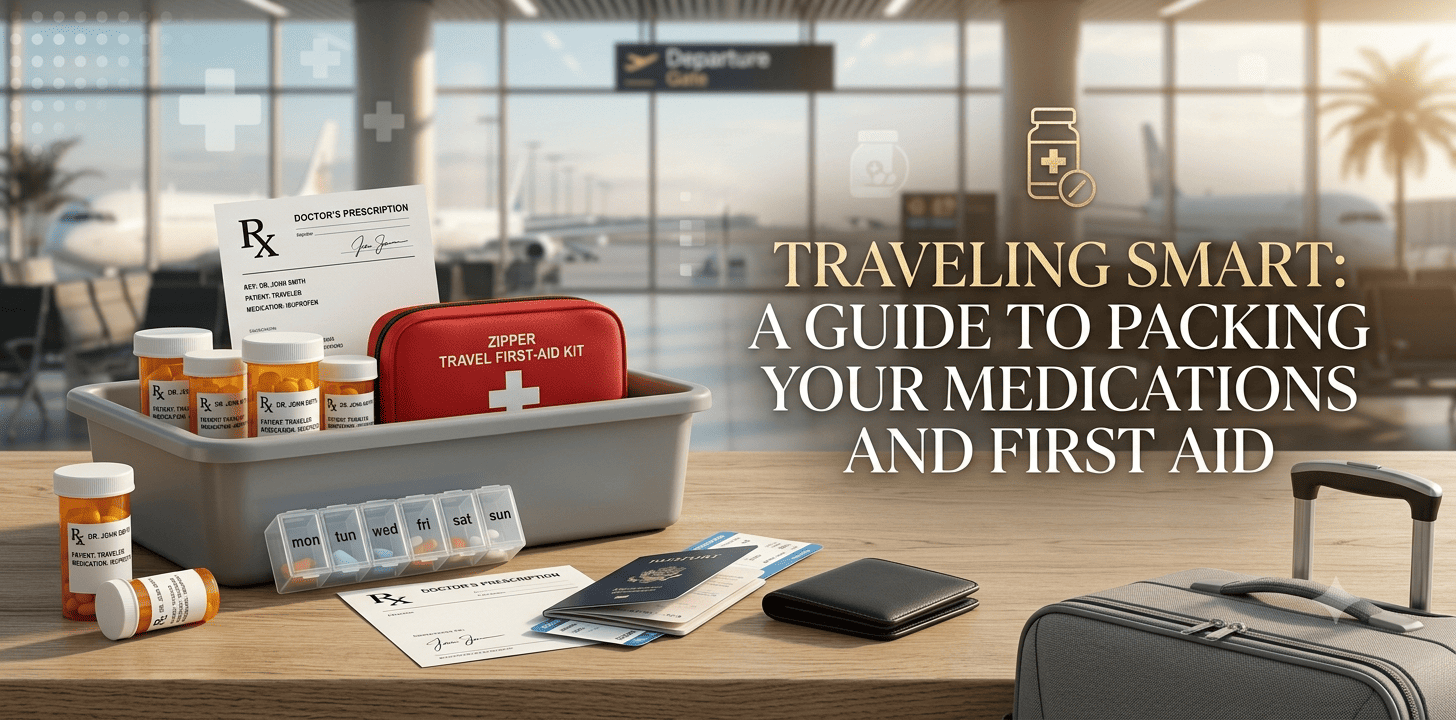
For NRIs heading home, the medicine bag is often the most stressful part of packing — your own daily prescriptions, a stash of supplies for elderly parents, maybe insulin or an inhaler that can't go astray. The reassuring news is that carrying medicines to India for personal use is completely allowed and usually straightforward, as long as you follow a few rules on quantity, packaging, and paperwork. Get those right and you'll breeze through customs; get them wrong and you risk a confiscated bag — or worse, being without medication you depend on.
This guide covers the essentials of taking prescription drugs to India: how much you can carry, the medicine rules at India customs, the crucial documents (including the doctor's letter for medicine travel), how to pack medication for a flight, special advice for carrying insulin on a flight, and which drugs sit on India's restricted or prohibited list. Whether you're flying non-stop or connecting through the Gulf with Myflyyatra, a little preparation makes the whole journey easier.
Please note: This is general travel guidance, not medical or legal advice. Drug rules change and are enforced differently in practice. Always confirm the current rules for your specific medicines with your doctor, India's drug regulator CDSCO and the Indian embassy before you travel — especially for any controlled or unusual medication.The Short Answer: Yes, With Conditions
India permits travelers to bring prescription and over-the-counter medicines for personal use. For most people carrying everyday medications — for blood pressure, diabetes, thyroid, cholesterol, and similar chronic conditions — the rules are simple:
- Carry a reasonable, personal-use quantity.
- Keep everything in its original packaging with the pharmacy label.
- Carry your prescription (and ideally a doctor's letter).
Standard personal-use medicines in reasonable amounts clear Indian customs without difficulty and generally don't need to be declared. The complications only arise with large quantities or with controlled substances — covered below.
How Much Medicine Can You Carry to India?
The golden rule is "personal use." That means enough for you, not enough to look like you're importing to sell.
- General prescriptions: A supply of up to around 90 days (three months) is widely accepted as a reasonable personal-use quantity. Some official baggage guidance references a 30-day duty-free supply, so if you're carrying more than a few months' worth, be ready to show your prescription and explain.
- Controlled substances (narcotics/psychotropics): These are held to a stricter standard — often a 30-day limit — and need extra documentation, sometimes advance approval (more below).
- Large or commercial-looking quantities: Anything that looks beyond personal use can attract scrutiny. If you must carry more, declare it at customs and have your prescriptions ready.
When in doubt, carry only what you genuinely need for the trip plus a sensible buffer, and keep the paperwork handy.
The Documents You Need
Paperwork is what turns a potential problem into a non-event. Bring:
- Your original prescription, ideally with the name matching your passport.
- A doctor's letter naming each medicine, its generic name, the dosage, and the condition it treats. This is the single most useful thing you can carry — it proves the medicine is yours and explains why you need it, which matters most for injectables, syringes, and anything stronger.
- Original packaging with the pharmacy label for every medication — don't decant pills into unlabeled organizers for the international leg.
A doctor's letter for medicine travel is especially important if you carry needles, insulin, or any controlled drug, and it smooths both airport security and customs.
India's Prohibited & Restricted Medicines
This is the part that catches people out, because a drug that's routine in the USA can be tightly controlled — or outright banned — in India. There isn't one simple "prohibited list," but here are the key categories to know:
- Cannabis, CBD oil, and THC products are completely banned in India, regardless of a foreign prescription or the product's legal status back home. Do not bring these in any form.
- Narcotics and psychotropic substances fall under India's NDPS Act and are heavily restricted. This includes strong opioid painkillers (like oxycodone), benzodiazepines (such as Xanax and Valium), codeine, and tramadol. These require additional documentation, are limited to small personal-use amounts, and for narcotic-classified drugs, travelers should ideally obtain advance clearance from India's Narcotics Commissioner.
- ADHD stimulants (Adderall, Ritalin) are generally allowed for personal use, but only with a valid prescription and a doctor's letter — and they may be scrutinized, so documentation is essential.
- Certain fixed-dose combination (FDC) medicines that are freely available abroad have been banned by CDSCO in India. If you take a combination drug, check its status before you travel.
Carrying NDPS-classified medicines without proper documentation can lead to seizure and serious legal trouble under Indian law. Enforcement can vary, but international airports tend to apply higher scrutiny — so never gamble with a controlled substance. Check with CDSCO or the Indian embassy for anything on this list.
How to Pack Medication for a Flight
Smart packing protects both your medicines and your peace of mind:":
- Always pack medicines in your carry-on, never in checked luggage. Checked bags can be delayed or lost, and cargo holds can get too hot or cold for sensitive drugs like insulin.
- Keep everything in original, labeled packaging so it's easy to identify at security and customs.
- Carry more than you need. Pack a buffer supply in case of flight delays or a longer stay, and keep a backup of essentials in a separate bag if you can.
- Know the liquids rules. In the US, TSA allows medically necessary liquid medications over the 3.4 oz (100 ml) limit in carry-on — just declare them to officers at screening, where they may be screened separately. On the India side, medically necessary liquid medicines are similarly exempt from the 100 ml cabin rule — declare them at the CISF security checkpoint with your prescription.
- Account for time zones. With the 9.5–13+ hour time difference between the US and India, plan your dosing schedule for the journey and the first days after landing.
Carrying Insulin on a Flight
Airline Pet Policies for USA–India
If you or a family member is diabetic, a little extra planning makes carrying insulin on a flight stress-free:
- Keep insulin and all supplies in your carry-on — pens, vials, syringes, needles, glucometer, and test strips. Never check insulin, as freezing cargo holds can ruin it.
- Keep it cool, not frozen. Use an insulated travel pouch with a gel pack. Frozen gel packs are generally allowed as medically necessary items — just declare them at security.
- Carry your doctor's letter confirming you need insulin and syringes; this clears the way for needles at security on both ends.
- Bring extra. Pack more insulin and supplies than the trip strictly requires, in case of delays.
- Adjust for time zones. Talk to your doctor before you travel about timing doses across the long flight and the shift to Indian time.
At Indian Customs: What to Declare
India uses a simple channel system on arrival:
- Green channel (nothing to declare): Fine for standard personal-use medicines in reasonable quantities and original packaging. Most travelers pass through here without issue.
- Red channel (declare): Use this if you're carrying a controlled/NDPS substance, a commercially significant quantity, or anything you're unsure about. Declaring proactively, with your prescription and doctor's letter in hand, is always safer than being questioned later.
Keep your documents accessible — not buried at the bottom of a checked bag — so you can produce them on request.
Carrying Medicines for Relatives
Many NRIs want to bring a supply of medication for elderly parents or relatives in India. Be cautious here: medicines are meant to be for the traveler's personal use, and large quantities carried for others can look commercial and invite scrutiny or seizure. If you do bring some for family, keep the amounts reasonable, carry the relevant prescriptions, be ready to explain, and declare at customs if the quantity is significant. When in doubt, ask CDSCO or the embassy first.
Quick Checklist Before You Fly
- Medicines in original, labeled packaging
- Copy of your prescription (name matching passport)
- Doctor's letter listing medicines, dosages, and conditions
- All medication in carry-on, with a buffer supply
- Controlled/unusual drugs checked with CDSCO / embassy in advance
- Insulin in a cool pack; injectables covered by the doctor's letter
- No cannabis/CBD/THC products of any kind
- Dosing schedule planned for the time-zone change
Frequently Asked Questions
A personal-use supply — commonly up to about 90 days (three months) for general medicines. Controlled substances are limited more strictly (often ~30 days) and need extra documentation. Declare larger amounts.
Not for standard personal-use quantities in original packaging — you can use the green channel. Declare controlled substances or large quantities via the red channel, with your prescription ready.
No. Cannabis, CBD, and THC products are completely banned in India, regardless of a foreign prescription.
Yes. Keep them in your carry-on with a cool pack, and carry a doctor's letter for the needles and injectables. Medically necessary liquids are exempt from the 100 ml limit.
Your doctor's letter and prescription, plus keeping every medicine in its original labeled packaging.
Final Word
Carrying medicines to India is rarely a problem for the prepared traveler. Keep your medications in your carry-on and in their original packaging, bring a prescription and a doctor's letter, stick to sensible personal-use quantities, and steer well clear of anything banned or controlled without proper clearance. Verify the specifics for your particular medicines with your doctor and CDSCO before you fly — and let Myflyyatra take care of the flights so the only thing left to plan is a healthy, hassle-free trip home.
What Customers Say About Us
We do our best to provide you the best experience ever
