


Duty-Free Alcohol & Cigarette Allowance for India: Limits, Rules & Tips (2026)
Search Cheap Flights
SAVE UP TO 40%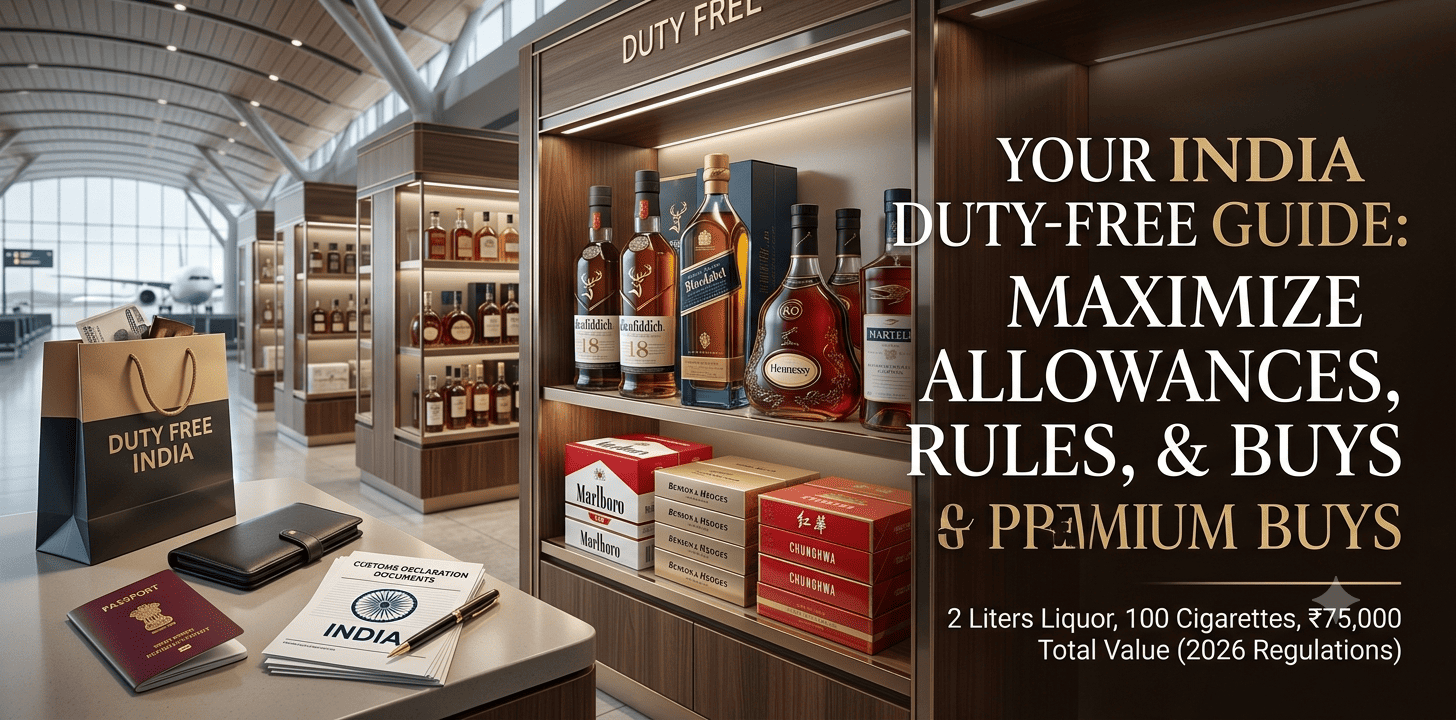
The duty-free shop is one of the small pleasures of international travel — a bottle of good Scotch for your father, a carton of cigarettes, a treat picked up between flights. But before you fill your basket on the way to India, it pays to know the limits, because Indian Customs is strict about how much alcohol and tobacco you can bring, and the duty on anything extra is steep enough to wipe out the "duty-free" saving entirely.
This guide lays out India's duty-free alcohol allowance and cigarette rules clearly: how much liquor you can bring, the tobacco limit, what happens if you go over, how to carry it through security, and some smart duty-free shopping tips for NRIs. And once Myflyyatra has sorted your flights to India, this is one more small thing you'll be glad you got right.
Please note: This is general guidance, not legal or customs advice. Allowances and duty rates change (India updated its baggage rules in 2026), and there have been proposals to tighten alcohol and tobacco quotas further. Always confirm the current limits with Indian Customs (CBIC) before you travel.
The Quick Answer: Your Limits at a Glance
For an adult passenger arriving in India, the duty-free allowance for alcohol and tobacco is:
- Alcohol: up to 2 litres of liquor or wine, total.
- Tobacco: 100 cigarettes, or 25 cigars, or 125 grams of tobacco.
These are separate carved-out limits — they're not part of the general ₹75,000 goods allowance, and they have their own fixed caps. Both are for adults (18 and above); the allowances are zero for minors, and a child's allowance can't be transferred to a parent.
India's Duty-Free Alcohol Allowance
The alcohol rule is refreshingly simple: 2 litres per adult passenger, duty-free — and it's the total volume that counts, whatever the mix.
- It doesn't matter whether that's two 1-litre bottles of wine, one bottle of whisky and one of vodka, or a mix of beer and spirits. The combined volume across all alcoholic drinks cannot exceed 2 litres.
- Watch the bottle sizes: three 700ml bottles equal 2.1 litres — just over the limit, which means the excess must be declared.
- Duty-free shop purchases count too. Alcohol bought at the airport duty-free (departure or arrival) still counts toward your 2-litre allowance — it's not a separate quota.
- The allowance is per adult, and free allowances can't be pooled between passengers.
So when bringing liquor to India, plan your bottles to land at or under 2 litres per adult, and you're clear.
Cigarette & Tobacco Allowance
The tobacco allowance is equally fixed. Per adult passenger, duty-free:
- 100 cigarettes (roughly one carton), or
- 25 cigars, or
- 125 grams of tobacco.
It's one of these three, not all of them — and duty-free cigarette purchases count toward the limit just like alcohol. A word of caution here: going over the tobacco allowance often results in confiscation rather than a simple duty payment, because customs generally won't bother assessing duty on small excess tobacco quantities. In short, don't exceed it.
What Happens If You Go Over
This is why experienced travellers never push their luck: the duty on excess is brutal.
- Excess alcohol is taxed at an effective rate of around 150% of its assessed value once basic customs duty, surcharge, and IGST are combined. So that "duty-free" bottle of Scotch over your limit can end up costing its shop price plus roughly one-and-a-half times its value again in Indian tax. For premium bottles, it climbs even higher.
- The process: You declare the excess at the Red Channel on arrival. The officer assesses the value (often from a reference price list), issues a TR-6 challan, you pay by card or cash at the counter, and you walk out with a receipt.
- Excess tobacco is usually confiscated outright.
- Skipping declaration and walking through the Green Channel with excess is smuggling under the Customs Act, 1962 — risking confiscation, fines, and in serious cases prosecution.
The maths almost never works in your favour above the limit, so it's simply not worth over-buying.
How to Carry It: Airline & Security Rules
Getting alcohol home safely means following aviation rules as well as customs limits:
- Duty-free alcohol bought after security can be carried onboard, but it must stay sealed in the tamper-evident duty-free bag (STEB) with the receipt visible and the seal unbroken.
- Alcohol not bought at duty-free (over 100ml) must go in your checked baggage — you can't take it through security in your cabin bag. Wrap bottles well to prevent breakage.
- High-strength spirits face limits: very high-ABV alcohol may be restricted or barred, so check your airline's rules for anything unusually strong.
- The domestic-connection trap: If you land in India internationally and then take a domestic flight onward, remember that liquids over 100ml — including your duty-free bottles — generally can't pass through domestic security. Either pack them in checked baggage for the domestic leg, or buy on arrival at your final city (see below).
Smart Duty-Free Shopping Tips for NRIs
A few moves make NRI duty-free shopping smarter:
- Consider buying on arrival in India. Major Indian airports have arrival duty-free shops, so you can buy your alcohol and tobacco after landing — within the same allowance — which avoids breakage, saves carrying bottles across connections, and neatly sidesteps the domestic-security liquids problem.
- Count everything toward your allowance. Whatever you buy at departure, in transit, or on arrival all goes toward the same 2-litre / 100-cigarette caps.
- Keep your receipts in case customs wants to verify value.
- Don't over-buy on impulse — the excess duty erases the saving.
- Buy for yourself. Allowances are personal and can't be pooled, so don't plan around carrying someone else's quota.
The Dry State Warning
One crucial point that catches people out: Gujarat and Bihar are dry states, where alcohol is prohibited — even within your duty-free allowance. If your final destination is Gujarat or Bihar, don't bring alcohol at all. Some other regions (such as parts of the Northeast and Lakshadweep) also have restrictions, so check your specific destination.
Quick Checklist
- Alcohol: keep the total at or under 2 litres per adult
- Tobacco: 100 cigarettes or 25 cigars or 125g — not all three
- Remember these are adults-only (18+) and can't be pooled
- Duty-free purchases count toward the same limits
- Declare any excess at the Red Channel (duty ~150% on extra alcohol)
- Carry duty-free alcohol sealed in its STEB bag with receipt
- Put alcohol in checked baggage if you have a domestic connection
- No alcohol at all if your destination is Gujarat or Bihar
Frequently Asked Questions
Up to 2 litres total per adult passenger, whatever the mix of drinks. Anything above must be declared and taxed at roughly 150%.
100 cigarettes, or 25 cigars, or 125 grams of tobacco — one of these, per adult. Excess is usually confiscated.
Yes. Alcohol and tobacco bought at any duty-free shop — including on arrival in India — count toward the same 2-litre and 100-cigarette caps.
Around 150% of the assessed value for spirits once all taxes combine, paid at the Red Channel via a TR-6 challan. It's rarely worth it.
No — Gujarat and Bihar are dry states where alcohol is banned even within your allowance. Check your final destination.
Final Word
Duty-free shopping on the way to India is a nice perk, as long as you stay inside the lines: 2 litres of alcohol and 100 cigarettes per adult, duty-free, with steep taxes and confiscation waiting for anything over. Buy within your limit — ideally on arrival if you're connecting to a domestic flight — declare honestly if you go over, and skip alcohol entirely if you're headed to a dry state. Confirm the current rules with Indian Customs before you fly, book your journey with Myflyyatra, and enjoy that bottle of Scotch exactly as intended: as a gift, not a customs headache.
This article is general information, not legal or customs advice. India's duty-free allowances and duty rates change and are applied at the discretion of Indian Customs; the 2026 Baggage Rules are recent and further changes have been proposed. Always confirm current limits with Indian Customs (CBIC) before travelling.
What Customers Say About Us
We do our best to provide you the best experience ever
