


Traveling to India with Elderly Parents: Flights, Airport Assistance & Comfort Tips
Search Cheap Flights
SAVE UP TO 40%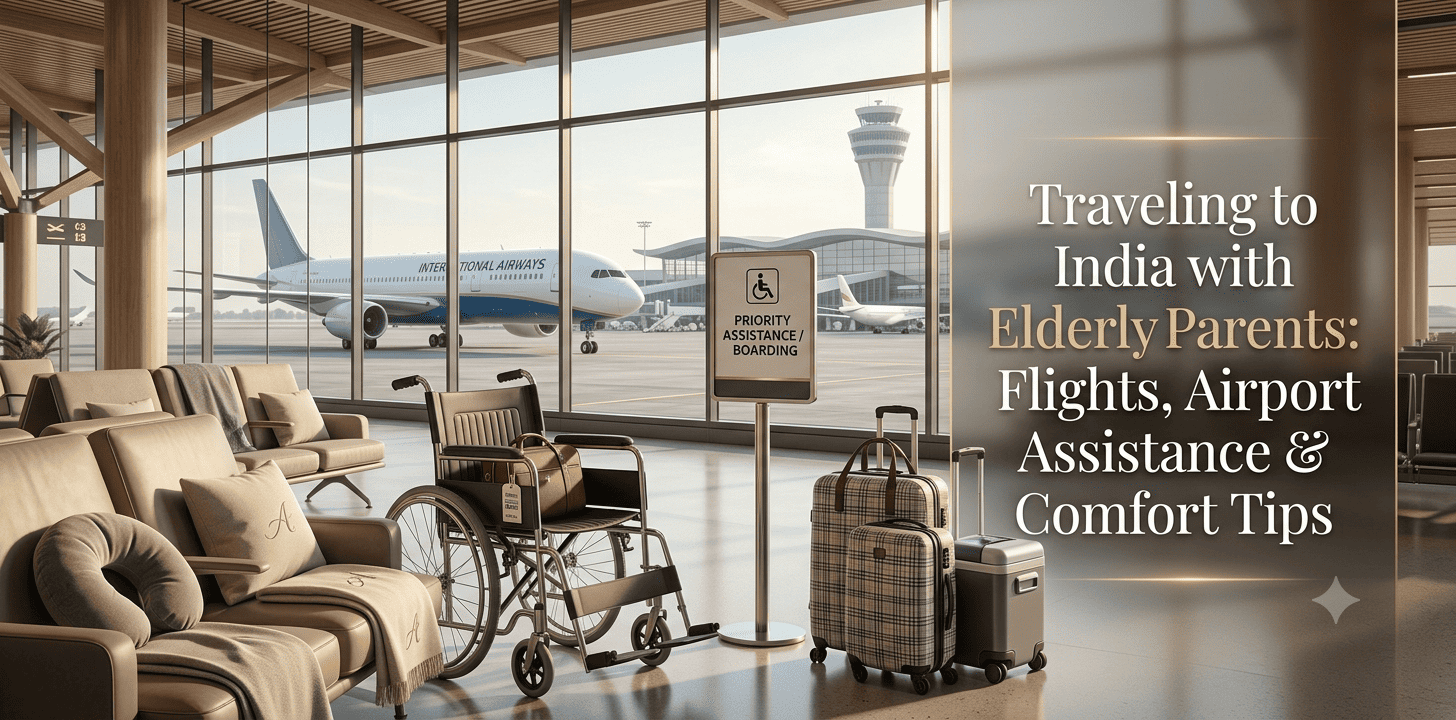
Taking your parents to India — or bringing them home for a long visit — is one of the most meaningful trips a family can make. It can also be one of the most worrying. A 14-to-24-hour journey across the world is a lot for anyone, and more so for a parent who tires easily, walks slowly, takes daily medication, or simply finds big airports overwhelming. The reassuring truth: with the right flight, a little advance planning, and the free assistance airlines and airports already provide, the whole journey can be calm, dignified, and genuinely comfortable.
This guide walks you through everything about traveling to India with elderly parents: how to choose comfortable, ideally direct flights, when business class is worth it, how to book senior citizen airport assistance, the health prep that matters, and a complete senior travel checklist for India. And once Myflyyatra helps you find the gentlest routing home, the rest is just thoughtful preparation.
A quick note: Every parent's health is different. For anyone frail, recently hospitalised, or managing a serious condition, check with their doctor before booking, and confirm any medical-clearance requirements directly with the airline. This guide is general help, not medical advice.Start With the Right Flight: Direct When You Can
The single biggest comfort decision is the flight itself. For elderly parents, fewer stops means less strain — less walking, fewer security lines, less risk of a missed connection or lost wheelchair.
- Choose a non-stop if one serves your city. From the USA, non-stop service to India is concentrated on Delhi and Mumbai, mostly from the East Coast (New York/JFK, Newark) and a few other gateways. A single long flight, however tiring, is far gentler on a senior than a multi-leg journey — and if their final destination is another Indian city, a short domestic hop after a rest is easier than a second long-haul.
- If there's no non-stop, pick one clean connection. A single stop through a Gulf hub (Doha, Dubai, or Abu Dhabi) with a comfortable — not tight, not overnight — layover is the next best thing. Enough time to use a lounge, freshen up, and reach the next gate without rushing.
- Avoid multi-stop itineraries and tight connections entirely. The few dollars saved aren't worth the exhaustion and risk.
This is exactly where Myflyyatra helps: rather than defaulting to the cheapest multi-stop fare, you can compare the non-stop and single-connection options and choose the routing that keeps your parents most comfortable end to end. Whether it's Rdirect flights from New York to Delhi or a well-timed one-stop, the gentlest option is rarely the flashiest — and that's the point.
Is Business Class Worth It for Elderly Parents?
For a long-haul flight, business class for elderly travellers is one of the most worthwhile upgrades you can make — and not for luxury's sake:
- A lie-flat bed lets them actually sleep, and keeps blood circulating on a long flight, which matters for older bodies.
- Priority boarding and lounge access mean less standing, less queuing, and a calm place to rest before departure.
- More space and attentive service make medication, meals, and moving around far easier.
If a full business fare is beyond budget, premium economy is an excellent middle ground — noticeably more legroom, a deeper recline, and a footrest, at a fraction of the jump to business. Even choosing a bulkhead or extra-legroom seat in economy helps. The goal is simple: help them arrive rested, not wrecked.
Book Senior Citizen Airport Assistance in Advance
This is the part families most often overlook — and it's free. Airlines and Indian airports provide extensive special assistance for elderly and reduced-mobility passengers, but you need to request it ahead of time, not at the counter.
Wheelchair assistance comes in three levels (you'll see these codes when booking):
- WCHR — for a parent who can walk short distances and manage a few steps, but can't handle the long walk through a big terminal.
- WCHS — for someone who can't manage stairs but can walk to their seat.
- WCHC — for a parent who is largely immobile and needs a wheelchair all the way to the aircraft seat, with an onboard wheelchair for lavatory access.
- It's free, in every cabin class, on airlines like Air India.
- Request it at the time of booking (or via "Manage Booking," or by calling the airline) — ideally at least 48 hours before departure. Walk-up requests on busy days can mean long waits.
- Assistance covers both ends — a staff member helps through check-in, security, immigration, and priority boarding at departure, and again through immigration, baggage, and out to the arrivals meeting point on landing.
- You can bring their own wheelchair, carried free as checked baggage and returned at the aircraft door or on arrival.
- Indian airports provide free electric buggies inside large terminals (Delhi T3, umbai T2, Bengaluru T2, Hyderabad) as a mandated senior-citizen entitlement — a real help across those vast concourses.
- Want to escort them to the gate yourself? Ask the airline for a gate pass so you can accompany them past security.
Key things to know:
A practical seat tip: request an aisle seat in the front third of the aircraft. It shortens the walk on and off, makes the lavatory easier to reach, and lets cabin crew check in on them more often.
Before You Fly: Health & Medical Prep
A little medical planning prevents most problems:
- See their doctor before the trip. Get the go-ahead to fly, discuss the long journey, and ask about a "fit to fly" note if they've had recent surgery or a serious condition — some airlines require medical clearance in certain cases.
- Sort medications carefully. Pack all medicines in the carry-on (never checked), in original labelled packaging, with a doctor's letter listing each one, plus a few extra days' supply in case of delays. Plan doses around the big time-zone change. (See a dedicated guide on carrying medicines to India for the customs side.)
- Get senior travel insurance with solid medical and emergency coverage — essential for older travellers, and worth buying early.
- Pre-order special meals (diabetic, low-salt, vegetarian) with the airline in advance.
Staying Comfortable on the Long Flight
Small habits make a big difference on a 14-hour-plus flight:
- Keep moving. Encourage gentle walks up the aisle every couple of hours, plus seated ankle rolls and leg stretches, to reduce the risk of blood clots (DVT).
- Compression socks are a simple, highly recommended aid for circulation on long-haul flights.
- Stay hydrated with plenty of water, and go easy on caffeine and alcohol, which worsen dehydration and jet lag.
- Dress for comfort — loose layers (planes swing between warm and cold) and easy slip-on shoes.
- Bring the comforts — a neck pillow, their glasses, a familiar snack, downloaded entertainment or music, and any small item that helps them relax.
At the Airport & On Arrival in India
- Arrive early — at least 3 hours before an international departure, more when wheelchair assistance is involved, so nothing is rushed.
- Let the assistance flow do its work — from check-in through priority boarding, staff will guide them; on arrival, they're met at the aircraft and taken through immigration and baggage to the exit.
- Complete India's E-Arrival Card before landing, as required, and keep their passport, OCI card, and visa handy.
- Arrange a reliable pickup — make sure a family member is at the arrivals meeting point, on time, so your parent is never left waiting alone after a long flight.
Managing Jet Lag & the First Days
Go gently. Plan a restful first day in India with nothing on the schedule — let them sleep, rehydrate, and adjust. Morning sunlight helps reset the body clock, and easing into local mealtimes and bedtimes over two or three days beats trying to power through. Build the itinerary around their energy, not the other way around.
The Senior Travel Checklist for India
- Passport, OCI card, and visa — all valid
- India E-Arrival Card completed
- Senior travel insurance with medical coverage
- Doctor's clearance / "fit to fly" note if needed
- All medications in carry-on, original packaging, with a doctor's letter and extra supply
- Wheelchair/assistance (WCHR/WCHS/WCHC) pre-booked 48+ hours ahead
- Aisle seat in the front section reserved
- Special meal pre-ordered
- Compression socks packed
- Comfortable layered clothing and slip-on shoes
- Neck pillow, glasses, snacks, entertainment
- Copies of documents, medication list, and emergency contacts
- Reliable pickup arranged at the India arrival airport
Frequently Asked Questions
Request it when booking, through "Manage Booking," or by calling the airline — ideally at least 48 hours before departure. It's free and covers both the departure and arrival airports.
Yes. Fewer stops mean less walking, fewer queues, and less risk. From the USA, non-stop service mainly serves Delhi and Mumbai; otherwise choose a single, comfortably-timed connection.
For a long-haul flight, often yes — the lie-flat bed, rest, and easier movement genuinely reduce strain. Premium economy is a strong middle-ground option.
Yes — major terminals offer free electric buggies and wheelchair assistance for seniors as a mandated entitlement, alongside the airline's own support.
Always the carry-on, in original packaging, with a doctor's letter and a few days' extra supply.tion helps ensure the appropriate wheelchair service is available throughout the journey.
Final Word
Traveling to India with elderly parents is really an act of love — and with a little planning, it can be a smooth and even joyful journey rather than a stressful one. Choose a direct or single-connection flight, consider a lie-flat seat, book their airport assistance in advance, prepare their medications and insurance with care, and give them a gentle first day to recover. Let Myflyyatra find the most comfortable routing home, and you can focus on what really matters: getting your parents to India safely, rested, and ready to enjoy every moment.
What Customers Say About Us
We do our best to provide you the best experience ever
